Political events do not stay political for long. A sanctions package, a closed shipping lane, an election that changes energy policy, each of these arrives first as a headline and later as a price. E.R.A. of Changes analyzes geopolitical developments through the only lens that matters to capital: their measurable impact on markets, economies, trade flows, energy supply and the movement of money across borders.
Our research is built to separate structural geopolitical change from headline noise. We cover armed conflicts, sanctions regimes, trade fragmentation, political transitions and the slow rearrangement of global power. This is not political commentary and it takes no political side. It is geopolitical intelligence translated into economic and investment context.
Forward-Looking Risk Analysis: identify potential scenarios before their economic consequences become fully visible in prices.
Market & Economic Impact: connect political developments to energy, currencies, inflation, trade and financial markets.
Independent Global Perspective: analyze competing geopolitical scenarios rather than relying on a single political narrative.
There are statements that are significant not for their content, but for who makes them and when. On October 22, the Israeli prime minister appeared on a business news channel and asked for a plan to be drawn up to circumvent international...
The picture over the past two weeks looks like a move toward peace. A phone call, a fuel deal, a special envoy in St. Petersburg, talks of a ceasefire. All of this paints a convenient picture: Trump applied pressure, the sides are sitting...
On the air, this is presented as protests against budget cuts. Schoolchildren, labor unions, wages, fuel prices. The surface level is described correctly—and yet it completely obscures the essence of the matter. What began in Europe this...
I received a summons. Not for my son, nor for my nephew of draft age—but for me, a man who served a long time ago and has been quietly listed in the reserves all these years. The wording is standard: to appear for the verification of...
Europe’s political landscape is in turmoil. Mass protests in Paris, strikes in a number of other European capitals, and electoral upheavals such as the success of “Alternative for Germany” in regional elections—all these are symptoms of a...
Over the course of a week, we’ve witnessed events that are usually spread out across various news stories: a diesel deal, the “energy truce” that Kyiv learned about from a news article, a three-day pause in the attacks—and Zelenskyy’s...
I’m writing to you not as an editorial team, but personally—because this is about something that will affect everyone who uses the internet in Russia. It’s better to find out about this in advance than when you urgently need to log in to...
In just one day, two of our predictions came true—the February one and the September one. In Riyadh, a rocket struck the passenger terminal: twelve dead, three hundred and nine wounded. In Washington, Trump announced an “energy truce”...
Trump asked Putin for diesel fuel. Putin agreed. A day later, the U.S. Treasury Department lifted the restrictions. Optimists are already talking about a détente and imminent peace. Let’s break down what’s actually on the table—and why...
When I wrote that emigrants would save Russia, almost everyone misunderstood me. They assumed I was talking about money and labor. But I was talking about something else—about people who have learned not to be afraid. The time has come to...
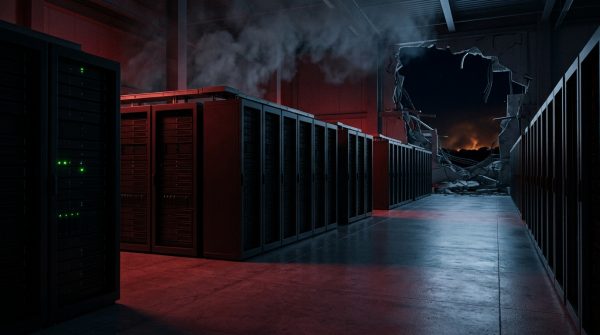
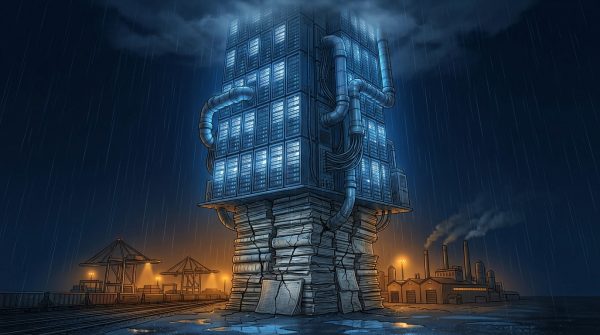
On the night of October 8, a drone struck the Yandex data center in Sasovo, Ryazan Region. A fire broke out, and operations at the site have been completely suspended. There were no injuries. The company stated that it cannot yet confirm...
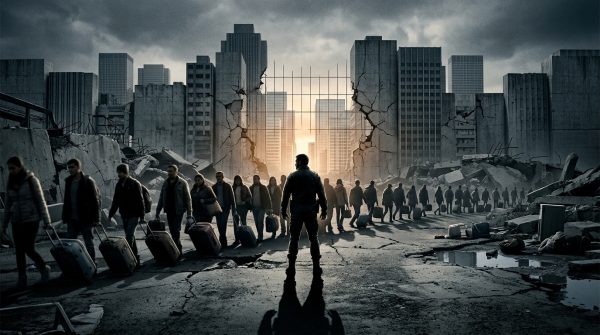
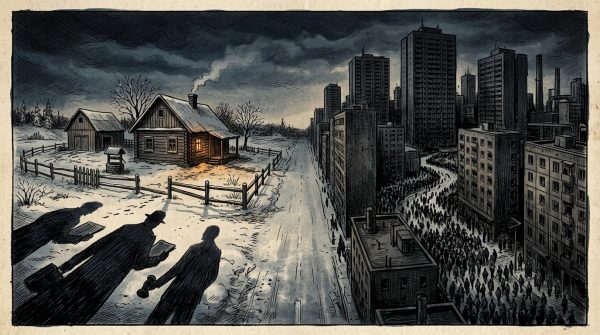
The escape plan seems reasonable. City life is all about dependence: water from the tap, heat on a schedule, money from a card, and food from chain stores that rely on deliveries. The countryside is autonomy: your own well, your own...
MAIN THESIS Failures are no longer isolated incidents. This is a sign of a systemic problem, not a random one A single failure is a coincidence. A series of failures of the same type within a single year is a characteristic of the system....
Dear customers and subscribers! Banks in Kyrgyzstan and other Central Asian countries have begun to massively reject SWIFT transfers to and from Russian citizens. Rejections are occurring even in cases where the connection to Russia is...
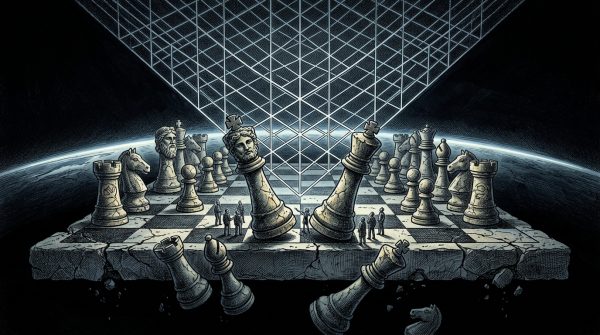
MAIN THESIS Deterrence worked as long as destruction was costly. It is no longer costly The entire architecture of twentieth-century global security rested on a simple economic foundation: to inflict serious damage, a state needs...
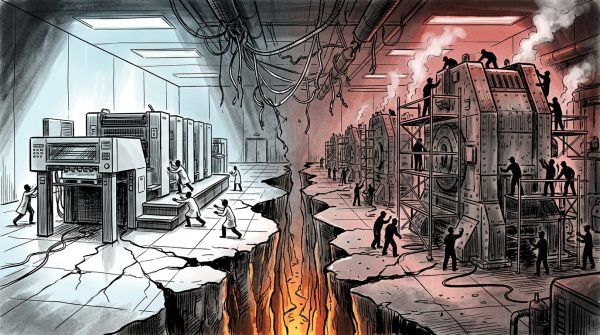
MAIN THESIS Export restrictions did not stop China. They paid for its entry into the industry The logic behind the sanctions was based on a simple calculation: without Western lithography equipment, China would not be able to manufacture...
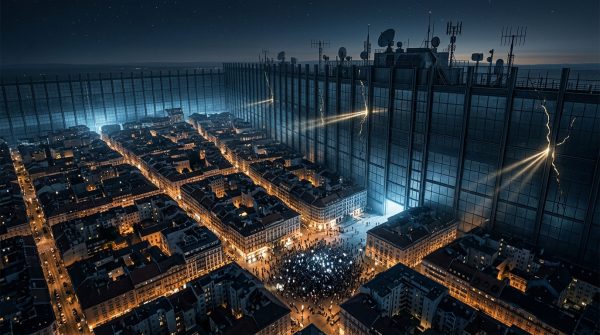
Bangladesh, August 2024: A student protest against quotas escalated into the overthrow of the government after authorities shut down the internet. By 2030, Russia will invest nearly 59 billion rubles in modernizing traffic filtering...
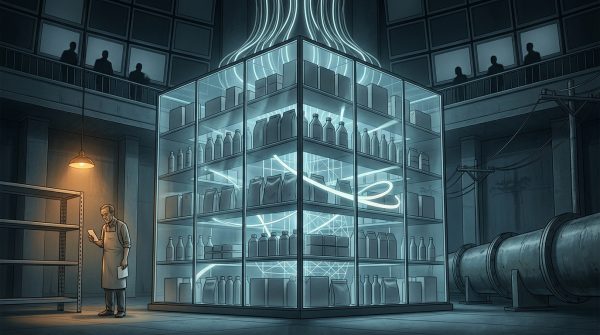
Starting January 1, 2027, the government will be able to see how the price of every item on the shelf is calculated: from the purchase price from the manufacturer to the store’s markup. The law has already been signed. At the same time, an...
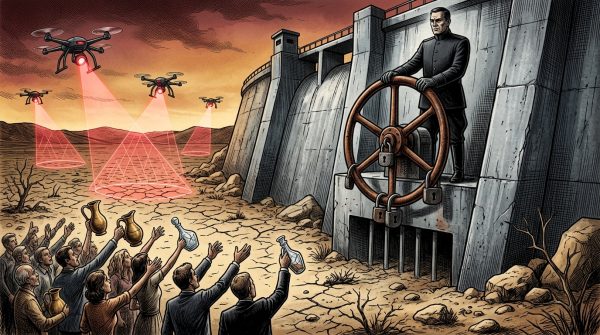
Tehran's reservoirs have fallen to 12% of their capacity, and Iran's president has warned of a possible partial evacuation of the capital, while 99% of Qatar’s drinking water comes from desalination plants concentrated in a few dozen...
In 2026, four American corporations will invest up to $630 billion in artificial intelligence infrastructure—a 62% increase over last year’s record figure. At the same time, Chinese labs are making comparable models freely available and...
Geopolitical Risk Analysis for Investors and Decision-Makers
Geopolitics reaches a portfolio through channels that are entirely financial. A conflict near a strait becomes a shipping insurance premium, then a freight rate, then a delivered energy price. A sanctions decision becomes a settlement problem, then a counterparty risk, then a currency move.
Export controls become commodity scarcity, and scarcity becomes inflation that central banks are obliged to answer. From there the effects travel further still into capital flows, sovereign spreads, supply chain redesign and the discount rate applied to every asset. Investor demand for geopolitical intelligence has grown for a straightforward reason: political shocks now transmit into energy, trade and market risk faster and more often than they did in the decade before.
Treating geopolitics as background noise is no longer a defensible position for anyone managing real exposure.
What Our Geopolitical Research Covers
Wars, Conflicts and Security Risks
We track military escalation and de-escalation, shifting alliances, defense commitments and the security of strategic infrastructure (pipelines, cables, ports and chokepoints) with attention to how conflict alters the cost and reliability of physical trade.
Sanctions and Economic Warfare
Financial restrictions have become a primary instrument of statecraft. Our coverage examines asset freezes, banking exclusions, export controls, price caps and trade restrictions, along with the secondary effects that usually matter more than the headline measure: rerouted flows, compliance costs, shadow logistics and the exposure of third-country intermediaries.
Energy, Resources and Supply Chains
Oil, natural gas, refined products, food, fertilizer, critical minerals and rare earths sit at the intersection of politics and price. We follow shipping routes, chokepoints, export policy and resource nationalism, because these are the mechanisms through which political decisions reach the cost base of the real economy.
Political and Regulatory Change
Elections, government formation, leadership succession, domestic instability and regulatory reversal all change the operating environment for capital. We assess what a political transition plausibly means for fiscal policy, taxation, energy strategy, foreign investment rules and market access.
Global Power and Financial Architecture
The structure beneath the system is moving. We analyze reserve currency composition, cross-border payment infrastructure, trade bloc formation, BRICS expansion, central bank reserve behavior and gold accumulation, the long-cycle shifts that reprice assets slowly and then all at once.
How Political Risk Becomes Financial Risk
Political risk is rarely priced at the moment it appears, and that delay is the entire opportunity. The chain runs in a recognizable sequence. A political event occurs. It imposes a physical or economic constraint, a route closed, a supplier excluded, a contract voided, a tariff applied. That constraint redirects capital, as investors reprice the affected region, sector or counterparty and move money toward perceived safety. Redirected capital changes inflation and liquidity conditions, because supply constraints raise input costs while risk aversion tightens funding. Only then do assets reprice broadly: equities, credit spreads, currencies and commodities adjust to a reality that was already visible weeks or months earlier.
The gap between the political event and the market repricing is where geopolitical intelligence earns its value. Our political risk work does not sit in isolation. It feeds directly into the Era CrisisMeter as one of the structural inputs behind our broader systemic risk reading. Related analysis: How Political Events Affect Financial Markets and Top 5 Global Geopolitical Risks 2026.
How E.R.A. of Changes Approaches Geopolitical Intelligence
We work in scenarios and probabilities, never in certainty. For any significant development we construct competing paths (escalation, containment, negotiated settlement) and assign a rough likelihood to each, then trace the economic transmission of every path rather than the one that feels most likely.
That transmission analysis is grounded in observable evidence: structural indicators, liquidity conditions, commodity and freight markets, and the political incentives actually facing decision-makers. We also read what markets are already pricing, because the analytical value lies in the divergence between the consensus scenario and the structural one. Anyone who tells you they know how a geopolitical situation resolves is selling confidence, not analysis. We publish our reasoning so you can judge it.
Who Is This Research For?
This research is written for investors and traders managing real exposure to energy, commodities, currencies and emerging markets, and for family offices and portfolio managers who need political risk framed in economic terms. It serves business owners and executives whose supply chains, input costs or export markets cross borders, along with analysts and researchers who need structured geopolitical context rather than headlines. It is also for serious readers who follow global political risk closely and want the economic consequences made explicit.
Frequently Asked Questions
What is geopolitical risk analysis?
Geopolitical risk analysis is the structured assessment of how political events between and within states (conflicts, sanctions, elections, trade disputes, shifts in alliances) affect economic conditions and financial markets. It is not prediction of political outcomes. It is scenario work that maps plausible political paths to their measurable economic consequences, so that exposure can be understood before it becomes visible in prices.
Why does geopolitics matter for investors?
Because political decisions set the terms on which the real economy operates. They determine which energy flows, which trade routes function, which counterparties can be paid and which markets remain open. Those conditions feed directly into inflation, currency values, commodity prices, sovereign risk and the cost of capital. An investor who ignores geopolitics is implicitly assuming the current arrangement holds, which is an assumption rather than an analysis.
What geopolitical topics does E.R.A. of Changes cover?
We cover armed conflicts and security risk, sanctions and economic warfare, energy and resource politics, supply chains and shipping routes, elections and regulatory change, and the longer-term restructuring of global financial architecture: reserve currencies, payment systems, trade blocs, BRICS and central bank reserve policy. Coverage is selected by economic materiality, not by news volume.
Turn Geopolitical Events Into Actionable Context
Political events will keep arriving faster than they can be priced. What matters is whether you can see the economic mechanism behind them while there is still time to act on it. E.R.A. of Changes publishes geopolitical research built for exactly that purpose: structural, independent and written in the language of markets rather than politics.